
We find where it actually starts
Not the shouting — the twenty minutes before it, where your jaw sets and your chest goes tight and you're still telling yourself you're fine. That is the part we can work with.
Whether it comes out loud or never comes out at all, the anger is doing a job. We work out what it's protecting, then build something that costs you less than the blow-up or the silence.
Free and 15 minutes. Already know you want to start? You can book an intake appointment from the same page.
 Across Minnesota
Most people arrive here having already tried to control it. Count to ten, walk away, keep the lid on. That works right up until the day it doesn't, and then you're back where you started with more evidence against yourself.
Anger is not a character defect. It is information — usually that a line got crossed, a need went unsaid for too long, or something underneath it never got dealt with. Hurt. Fear. Grief nobody let you have. Being talked over for years. The anger is the part loud enough to notice, so it takes the blame for all of it.
Which is why control alone fails. You can hold a lid on a signal, but you cannot hold it forever, and holding it does nothing about what it was pointing at.
Clear is kind.
I think of anger management as emotional regulation, and it is closely tied to recovery work. Same muscle. You learn to notice what you feel early enough to do something with it, and to say it while it is still a sentence.
Not the shouting — the twenty minutes before it, where your jaw sets and your chest goes tight and you're still telling yourself you're fine. That is the part we can work with.
Anger almost always sits on top of something less comfortable to feel. Once you can name what is underneath yours, it stops being the only tool that gets a response.
Saying what you need before it becomes a fight. Boundaries you can actually hold. This is the part most people were never taught, and it is most of the work.
Same as recovery: you manage risk by knowing it. We get clear on your triggers, watch the pattern together, and keep a record so you can see what is actually changing.

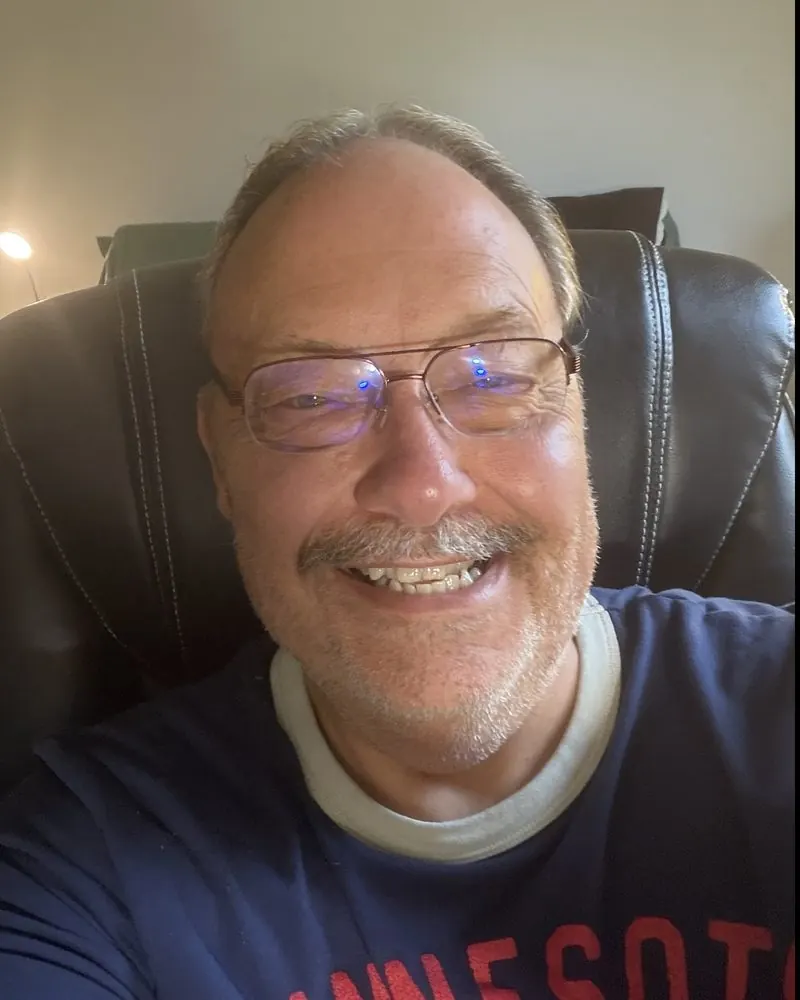
Duane WinterLPCC, LADC, CCMHC, NCC
I work with adults dealing with anger, addiction, anxiety, depression and the transitions that knock everything sideways. My approach is warm, down-to-earth and collaborative, so my hope is you'll feel comfortable being yourself while we figure out together what you need.
I'm a Licensed Professional Clinical Counselor and a Licensed Alcohol and Drug Counselor. Ten years of that has been as a mental health therapist, and fifteen were spent in addiction treatment before it — which is where I learned most of what I know about anger, because it is almost always in the room.
This is also a second career for me. I owned restaurants for nearly thirty years before I did any of this. Thirty years of staff, suppliers and long nights teaches you a fair amount about what people do with frustration, and I did not learn it from a textbook.
I have a relaxed way about me and I do laugh in session. I'll also get more challenging over time if I think you're stuck. Both of those are on purpose.
Most of what comes up when you search anger management is a course with a certificate at the end of it. This is not that. It's individual therapy, one to one, built around what is actually driving it for you rather than a curriculum everybody sits through.
These two travel together more often than not, and being sent to separate providers for them is common and unhelpful. I hold both licences, so whichever one brought you here, the other one is allowed in the room.
Ten years working with three county drug courts means I've spent a long time with people who did not choose to be there. It taught me to be useful to someone before they're convinced, and it's why I don't need you to arrive agreeing with anyone.
Everything is telehealth, anywhere in Minnesota. No waiting room, no parking lot, no running into someone you know on the way in. For a lot of people that's the difference between getting help and putting it off another year.
The first session is mostly me listening. You walk me through a recent one — what happened, what it felt like beforehand, what you did after. You will not be asked to defend yourself, and I am not keeping score. By the end we'll have a rough sense of what we're working on and whether I'm the right fit. If I'm not, I'll tell you and help you find who is.

Fifteen minutes, no cost, no commitment. Or skip it and book an intake from the same page. You tell me a little about what's going on and I'll tell you honestly whether I think I can help.
The first full session. What sets it off, what it's protecting, what it's costing you, and what you want to be like instead.
Weekly sessions. Early warning signs, the words for what you need, the things that never got repaired. You'll be able to see it changing, because we track it.
Ask me before you book. What I offer is individual therapy, not a court-approved anger management class with a completion certificate, and those are usually two different things in the eyes of a court. Tell me what you've been asked to provide on the consultation call and I'll give you a straight answer about whether I can help — rather than take your money and find out later.
Yes, and a good share of the people I see are in that group. Anger that never gets said out loud does not disappear, it just gets paid for somewhere else — usually in your sleep, your body, your drinking, or one afternoon when something minor finally tips it over. Not raising your voice is not the same as being fine.
That's a normal place to start and I'd rather you said it than pretended otherwise. I spent ten years working with drug courts, so most of the people I sat with had been sent. You don't have to agree with anyone's assessment of you to get something useful out of looking at it. If it turns out there's nothing here, that is also a real answer.
No. Anger is useful information and some of the angriest people I've worked with were angry about something entirely legitimate. The work isn't getting rid of it. It's getting it to show up in a form that gets you heard instead of one that costs you the relationship.
Often, and if it does we can work on both here. I'm licensed as a clinical counselor and as an alcohol and drug counselor, so you won't be sent to a second provider and asked to tell the story again. If drinking isn't part of your picture, it simply doesn't come up.
Most people notice the early warning signs sooner than they expect — that part is a skill and skills come with practice. What takes longer is whatever the anger was sitting on top of. We work weekly at the start and ease off as things steady. I won't string you along, and I'll say so when I think we're done.
Sessions are $125 for 45 minutes or $150 for 60, and the first appointment is a $200 assessment. I'm currently working through insurance credentialing, so for now this is a self-pay practice. If cost is the thing standing in your way, say so on the free consult and we'll talk about it honestly.
You don't have to arrive with it worked out, or agreeing that it's a problem, or with a tidy version of the last argument. You just have to be willing to have one honest conversation about it.
Free and 15 minutes. Already know you want to start? You can book an intake appointment from the same page.