You've stopped before. More than once. It holds for a while, and then it doesn't.
Addiction & recovery
Addiction counseling for people who are tired of starting over.
You don't need to have it sorted out before you reach out. We start where you actually are, name what's going on without dancing around it, and work out the next step together.
Free and 15 minutes. Already know you want to start? You can book an intake appointment from the same page.
 Across Minnesota
- Licensed
- Minnesota — statewide telehealth
- Credentials
- LPCC · LADC · CCMHC · NCC
- Experience
- 15 years in addiction treatment
- Drug courts
- 10 years across three counties
In his clients’ words
You already know how this goes.
You're managing it. Mostly. But the energy that takes is getting harder to keep up.
The people closest to you have stopped asking, and somehow that landed worse than the arguing did.
It isn't the drinking or the using that worries you most. It's who you are on the days without it.
Or it was never yours. A parent, a partner, a sibling — someone else's addiction shaped your whole life, and you've never had anywhere to put that.
And you suspect that being honest about all of it will only leave you feeling more ashamed than you already do.
Why it keeps coming back
Willpower was never the problem.
Most people who come to me have already proven they can stop. They've done thirty days, or six months, or a couple of years. Stopping was never the hard part.
The hard part is that the reason it started is still sitting there untouched. The anxiety. The grief nobody let you have. The anger you were told to swallow. What was modeled for you growing up. Take the substance away and all of that is still in the room, only now you're facing it without the one thing that used to make it quiet.
So it comes back. Not because you're weak, and not because you didn't want it badly enough. It comes back because nothing underneath it changed.
We repeat what we don't repair.
How we work
We go after what's underneath it.
I spent fifteen years in addiction treatment before I became a mental health therapist, and I made that move for one reason: almost everything I was treating turned out to be rooted in something else. So we work on both, with the same person, in the same hour.

We name it plainly
I don't dance around things. If something is getting in your way, I'll say so, and I'd rather do that early than let you spend six months circling it. Direct isn't the same as harsh.

We figure out what it's doing for you
Every pattern is solving something. Until we know what yours is solving, taking it away just leaves a hole. So we start there, without the lecture.

We build what goes in its place
Coping that actually works. Boundaries you can hold. Language for what you need. This is the part most people never got taught, and it's most of the work.

We track the risks
Recovery is managing risk. We get clear on your triggers, watch the patterns together, and keep a record of the journey so you can see what's actually changing.

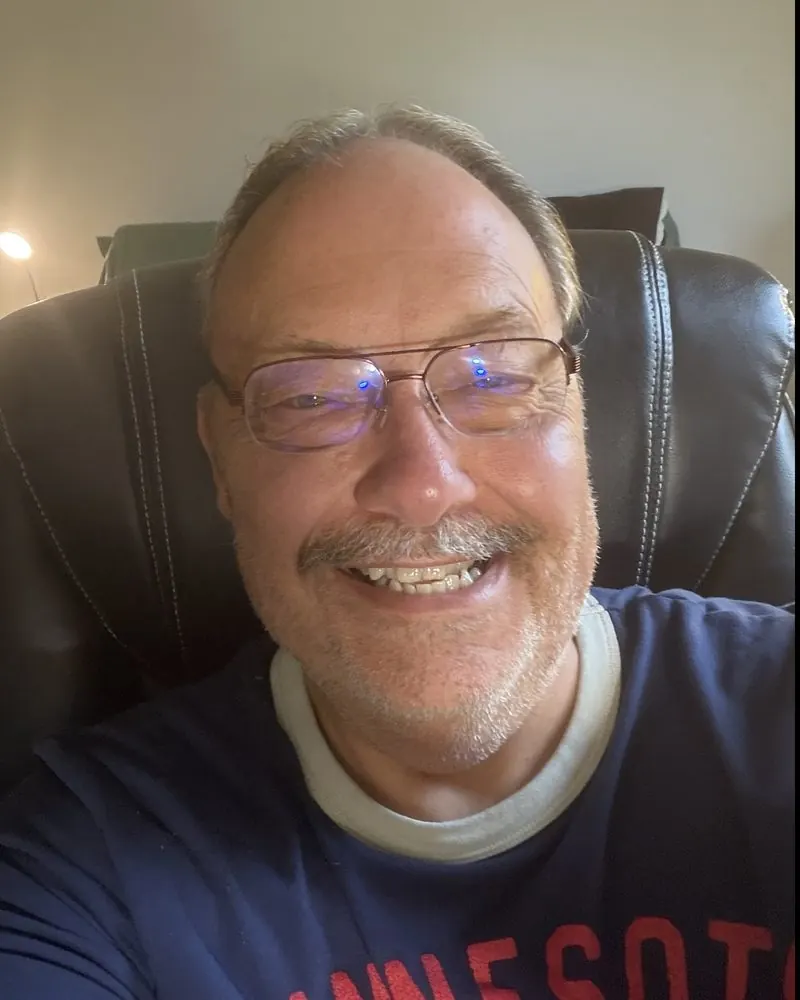
Duane WinterLPCC, LADC, CCMHC, NCC
Your therapist
Hi, I'm Duane.
I work with adults dealing with addiction, anxiety, depression, life stress and the transitions that knock everything sideways. My approach is warm, down-to-earth and collaborative, so my hope is you'll feel comfortable being yourself while we figure out together what you need.
I'm a Licensed Professional Clinical Counselor and a Licensed Alcohol and Drug Counselor. Fifteen years of that was spent in addiction treatment, including ten years working with three county drug courts, which means I've sat with people at about every point on this road — court-ordered and skeptical, quietly terrified, years in and afraid of losing it.
This is also a second career for me. I owned restaurants for nearly thirty years before I did any of this. I mention it because I didn't arrive here straight out of a classroom with a theory about your life, and because I know something about starting over as an adult when it would have been far easier not to.
I have a relaxed way about me and I do laugh in session. I'll also get more challenging over time if I think you're stuck. Both of those are on purpose.
A few things about how this practice runs.
01
Two licenses, one conversation
Most people end up with an addiction counselor for the substance use and a separate therapist for the anxiety or depression underneath it, repeating their story twice and hoping the two agree. I hold both licenses, so it's one room and one person.
02
Ten years in the drug courts
Working with three county drug courts means I've spent a long time with people who did not choose to be in the room. It taught me to be useful to someone before they're convinced, and it's why I don't need you to arrive motivated.
03
Family counts as a client here
If the addiction in your life belongs to someone else, you are not a side character in that story. Partners, adult children, parents and siblings do full work here on their own — not as a supporting role in somebody else's recovery.
04
Nobody in your town has to know
Everything is telehealth, anywhere in Minnesota. No waiting room, no parking lot, no running into someone you know on the way in. For a lot of people that's the difference between getting help and putting it off another year.
What to expect
The practical part.
The first session is mostly me listening. You tell me what's been going on in whatever order it comes out — it does not need to be organised, and you will not be asked to label yourself anything before you're ready. By the end of it we'll have a rough sense of what we're working on and whether I'm the right fit. If I'm not, I'll tell you and help you find who is.
- Format
- Video session, from wherever you are. Anywhere in Minnesota.
- Length
- 45 or 60 minutes.
- Rhythm
- Weekly at the start. We ease off as things steady.
- Investment
- $125 for 45 minutes, $150 for 60. A limited number of reduced-fee spots are available. Full pricing.
- Sobriety
- Not required to begin. We start where you are.

Three steps, and the first one is small.
-
1
Book a free consult
Fifteen minutes, no cost, no commitment. Or skip it and book an intake from the same page. You tell me a little about what's going on and I'll tell you honestly whether I think I can help.
-
2
We map what's actually happening
The first full session. What's underneath the pattern, what it's costing you, and what you want your life to look like instead.
-
3
We do the work
Weekly sessions. Skills, triggers, the things that never got repaired. You'll be able to see it changing, because we track it.
Questions
Things people ask before they call.
No. If sobriety were a prerequisite, almost nobody would ever get through the door. We start where you actually are. For some people the goal is stopping completely, for others it starts as getting honest about how much and how often. Either is a real place to begin.
Because most treatment is built to get you stopped, and stopping is usually the part you've already managed. What often goes unaddressed is what the substance was doing for you. That's where we spend our time. It isn't a guarantee — nobody honest will give you one — but it is a different target.
Yes, and you never have to take on a label you don't want. Plenty of the people I work with would not use those words about themselves. If a habit is costing you more than you're comfortable with, that's enough of a reason to look at it.
Yes, and this is a large part of my practice. Living with a parent's, partner's or child's addiction reshapes how you handle conflict, boundaries and your own needs, often for decades. You don't need them to be in recovery, or even in the room, for that work to be worth doing.
Both. I'm licensed as a clinical counselor and as an alcohol and drug counselor, which is the whole reason I went back for the second license — most of what I was treating in addiction work turned out to be rooted in mental health. You won't need two providers.
There's nothing to be good at. You don't need the right words or a tidy version of events — showing up and being reasonably honest is the entire skill. Most people are surprised how ordinary it feels. I laugh in session. It is a conversation, not an examination.
Sessions are $125 for 45 minutes or $150 for 60, and the first appointment is a $200 assessment. I'm currently working through insurance credentialing, so for now this is a self-pay practice. If cost is the thing standing in your way, say so on the free consult and we'll talk about it honestly.
One step
The change you're after is in the work you've been avoiding.
You don't have to be ready. You don't have to have a plan, or the right words, or a decision already made. You just have to be willing to have one honest conversation about it.
Free and 15 minutes. Already know you want to start? You can book an intake appointment from the same page.
- Serving
- All of Minnesota
- Clients
- Adults 18+
- Availability
- Accepting new clients
- Format
- Telehealth only